Launch without waiting for a clean slate.
Introduce a new product or operating capability around the systems already in use. We define the seams, build what is missing and integrate the rest.
SOFTWARE · DATA · INTEGRATION
DataLux turns business initiatives into working systems—designing and delivering the software, integrations and data foundations needed to launch new products, automate operations and connect existing platforms.
Bring us in when an initiative crosses business requirements, existing systems and delivery ownership. We can take the work from assessment and architecture through implementation and handover.
SELECTED EXPERIENCE ACROSS
Financial services • Payments • Media & streaming • Industrial & IoT
WHEN TO BRING US IN
The work gets valuable when a new product, acquisition, workflow or cost target crosses business rules, data, existing platforms and delivery ownership.
Introduce a new product or operating capability around the systems already in use. We define the seams, build what is missing and integrate the rest.
Acquisitions, new partners, reporting requirements and platform changes often succeed or fail at the interfaces. We handle the data, mapping, exceptions and workflow that make the change operational.
When the platform already works, we target the parts worth changing—cost drivers, manual handling, data quality, latency or operational bottlenecks—before recommending replacement.
COMMERCIAL FINANCE · DELIVERY
One foundation supported both management reporting and predictive analysis.
SELECTED DELIVERY
For a US commercial finance provider, the requirement was larger than “build a dashboard.” Risk and portfolio decisions depended on structured data, documents and external information living in different places.
We consolidated the sources into a data warehouse, introduced repeatable data flows and quality controls, built executive and credit-risk views, and created the foundation for repayment and macro-risk models.
The useful asset was not another report. It was a reusable decision foundation that could support reporting, automation and predictive models from the same underlying information.
See more selected workWHAT WE DELIVER
DataLux can own a bounded workstream or carry an initiative from assessment through implementation. The scope follows the business objective rather than a prepackaged product.
CONNECT
Create dependable flows between finance, operations, customer systems and external sources—then make mapping, reconciliation, quality and exceptions part of the process rather than after-the-fact cleanup.
Data engineering & integrationBUILD
From internal tools and portals to AI-assisted workflows, we design around the decisions, handoffs and exceptions that generic software leaves exposed.
Custom software & modernization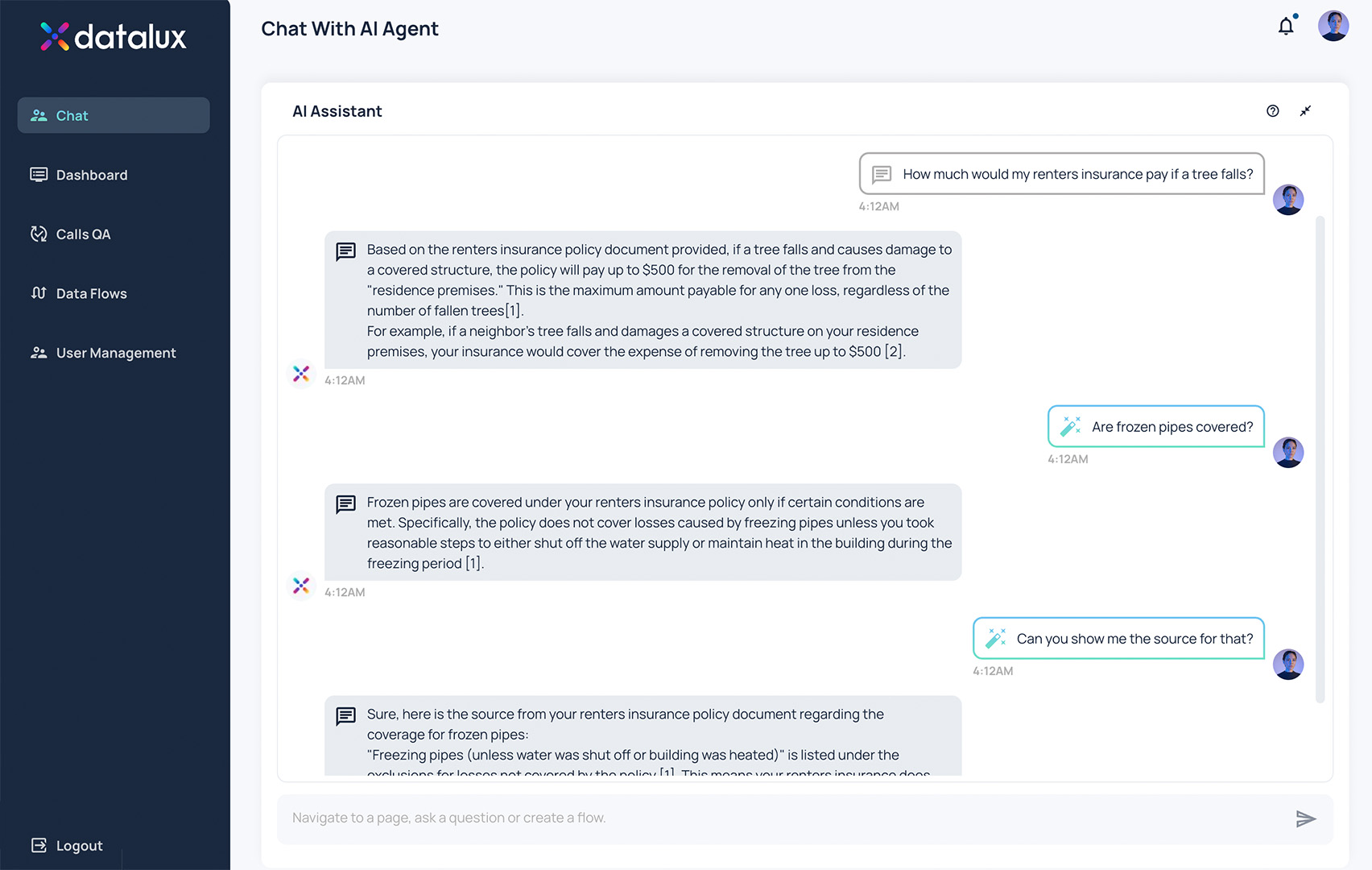
CLOUD ECONOMICS
Illustrative optimization view, not a client metric.
IMPROVE
Identify where infrastructure cost and performance no longer match business demand, then optimize the existing platform instead of turning every problem into a migration program.
Cloud engineering & optimizationHOW WE WORK
DataLux is useful when the work needs judgment as well as engineering. We keep business context, architecture and implementation in the same delivery conversation so decisions do not disappear into handoffs.
Meet DataLuxDefine the working capability, constraints and acceptance criteria before deciding what should be built, integrated or left alone.
Existing systems are an asset when they still do their job. We replace selectively and integrate deliberately.
Implementation is not complete when the demo works. Ownership, controls, support expectations and the path forward need to be clear.
BUILT BY DATALUX
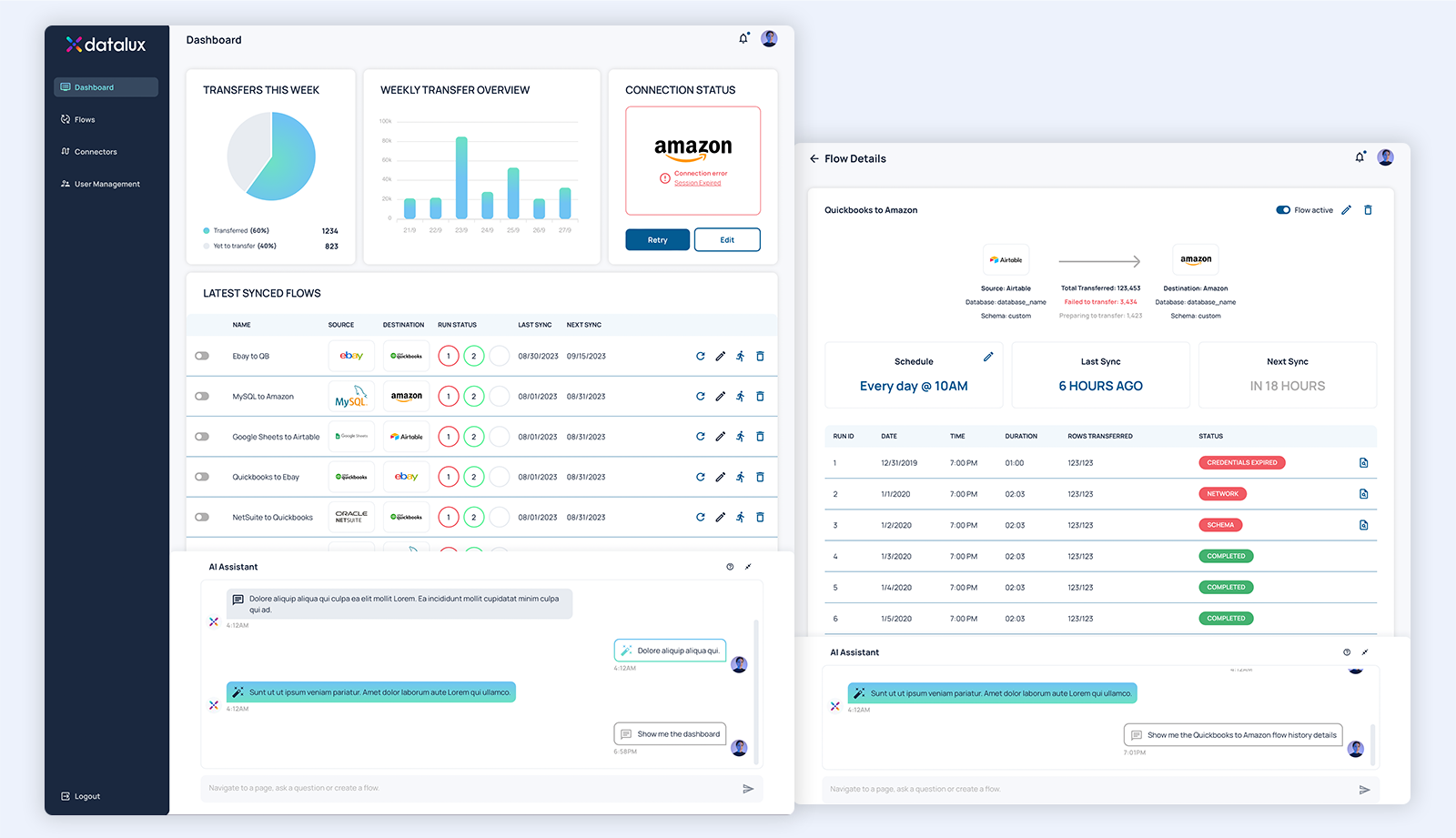
Our application work shows how we turn business rules, data and human steps into interfaces people can operate.
AI-ASSISTED WORKFLOW
Retrieve authoritative information without separating the answer from the operational context.
DATA MOVEMENT & MAPPING
Bring flows, connectors, mapping, run status and exceptions into one usable operating surface.

RIA OPERATIONS · OCT 2026
Why billing checks can all pass while the fee still differs from the client’s agreement.
Read the article
SOLAR PV · MAR 2026
Why two legitimate measurements can disagree—and what that means for operating decisions.
Read the article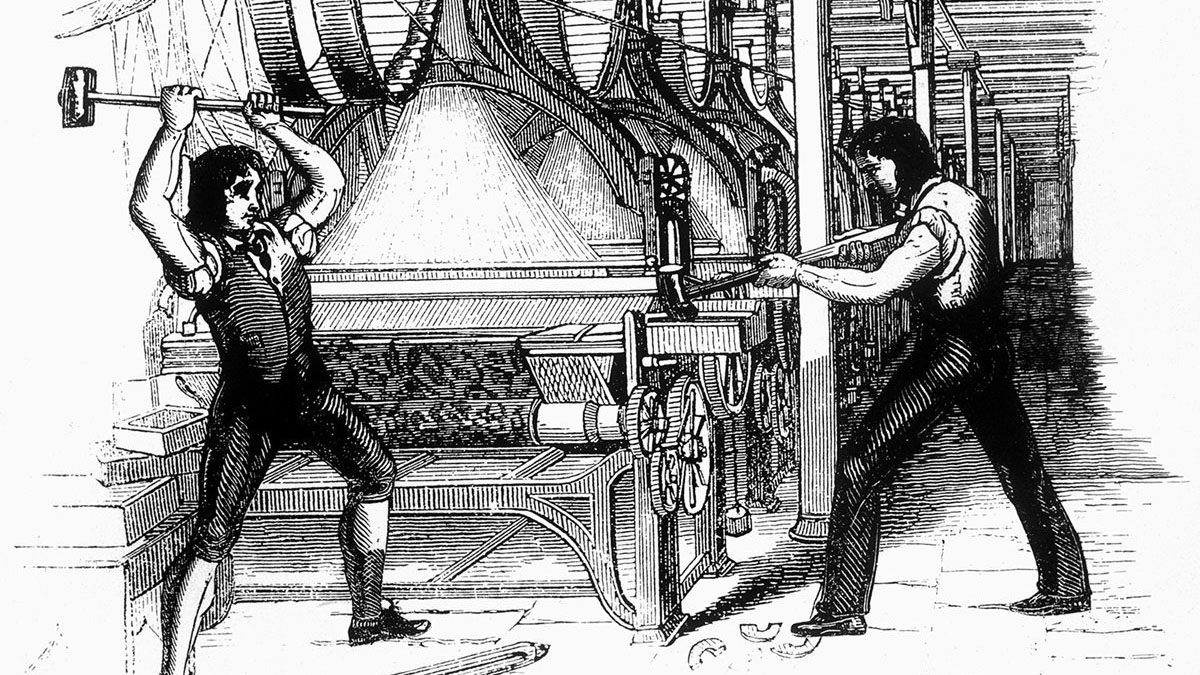
GENERATIVE AI · NOV 2023
Where automation changes roles, and where it creates new leverage.
Read the articleSTART WITH THE INITIATIVE
Bring us the objective, constraints and current environment. We can help define a credible first scope, identify what should stay in place and determine whether DataLux is the right team to deliver it.